Chicken
Smoked Boneless Skinless Chicken Thighs
sterling· February 21, 2024· 11 min read
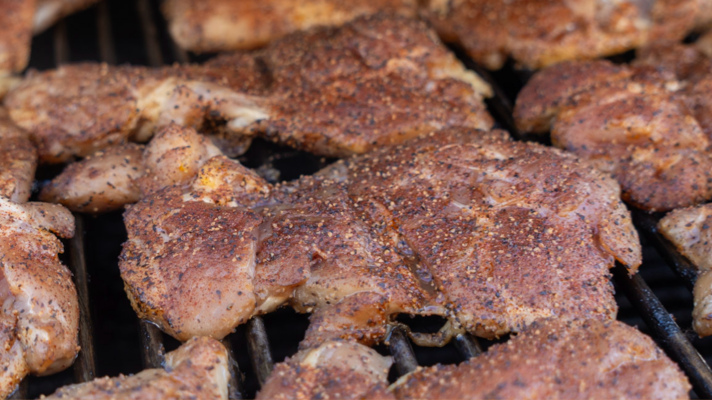
Ready for juicy perfection? Try this smoked boneless skinless chicken thighs recipe. Delicious smoked boneless skinless chicken thighs are extremely versatile and pair incredibly well with your favorite BBQ sides. I promise you they won’t disappoint.
Most smoked chicken thigh recipes are bone-in and skin-on. And I’m here for it. But I’m also here to say, there are times you want to add delicious smoked chicken thighs to a variety of dishes — tacos, salads, quesadillas, and pastas without worrying about chicken skin or bones. In those instances, you want a delicious boneless skinless chicken thigh. With a smoked boneless skinless chicken thigh, you smoke the chicken low and slow, allowing it to absorb those delicious smoky flavors without worry about rubbery chicken skin or working around the bone.
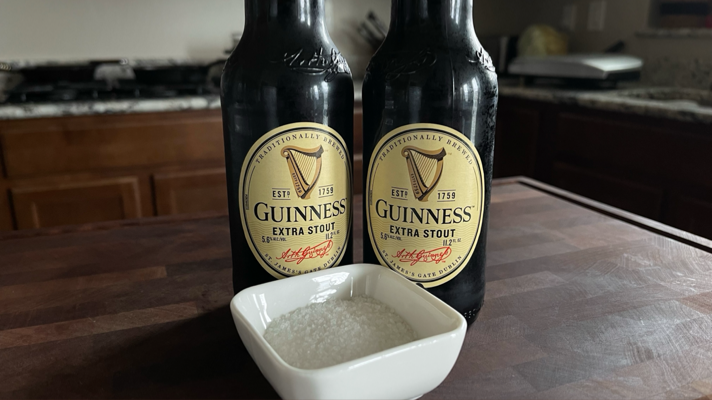
What is the best brine for smoked chicken thighs?
Brining your chicken thighs is a critical step that shouldn’t be overlooked. All things considered, a good brine takes a few seconds to make but makes a huge difference in the final product. This applies for boneless chicken thighs, chicken breasts, whole chickens, and anything poultry. Playing on this note, I would say; any brine is better than no brine at all. But for the sake of this recipe for my smoked boneless skinless chicken thighs, I love to brine my chicken thighs in a couple bottles of dark beer, preferably a stout with a little bit of salt. A stout is an ale in the beer family and usually very dark. They are malty, smoky, and have a strong, rich flavor. Making them ideal for drinking and brining chicken. Brine your chicken for at least 5-6 hours, I brine mine overnight to get the juiciest, most flavorful chicken possible.
The dry rub
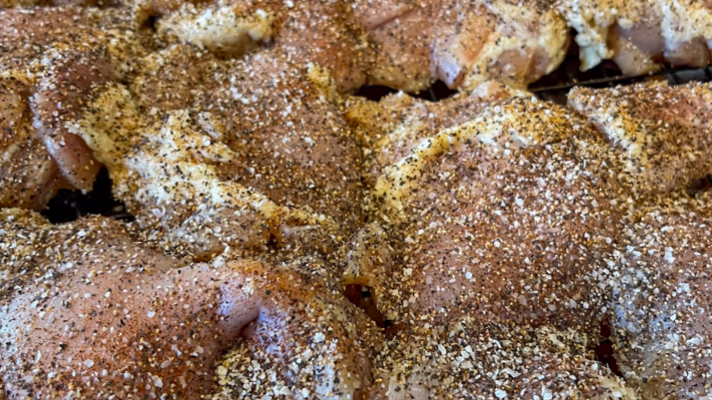
I keep this rub dead simple. Four ingredients. The goal isn't to bury the smoke flavor — it's to work with it.
- 1 tablespoon kosher salt
- 1 teaspoon freshly cracked black pepper
- 1 teaspoon chili powder
- 1 teaspoon garlic powder
Combine everything in a small bowl and mix. That's it.
If you want to push it further, smoked paprika adds a second layer of smoke that plays really well with fruit woods. Brown sugar will give you a slightly sweeter bark — just be aware sugar burns faster, so keep an eye on color at the 60-minute mark. A pinch of cayenne if you want heat.
The important thing with the rub is that you *apply it after the brine, not before*. Pat the chicken completely dry with paper towels before seasoning. Wet chicken won't take on rub properly, and it definitely won't develop bark.
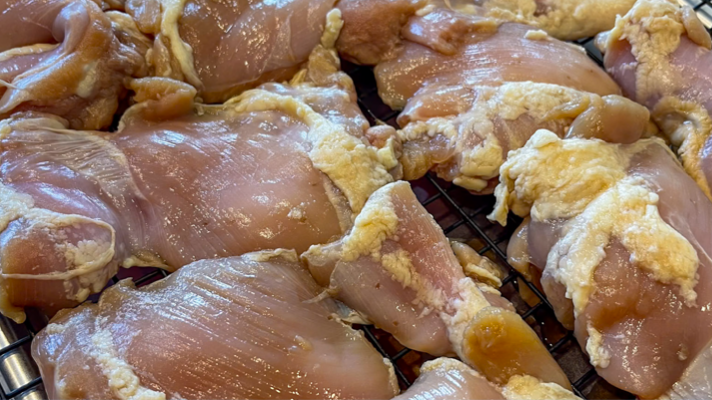
What temperature for smoked chicken thighs?
Most smoked chicken thigh recipes you will find will recommend a smoking temperature of at least 275°F. And this is absolutely correct if you are smoking chicken thighs with the skin on. However, removing the skin as a variable allows you to smoke chicken thighs low and slow. For smoking boneless skinless chicken thighs, smoke them at 250°F, ensuring a perfectly smoked dish.
Best wood for smoked boneless skinless chicken thighs
Wood choice matters more with chicken than with beef or pork. Chicken is a lean, mild protein — it picks up smoke fast, and the wrong wood can tip it toward bitter or acrid if you're not careful. With boneless skinless thighs, you've got no fat cap or skin to buffer it, so lighter smoke is almost always better.
Apple wood is my first call. The smoke is sweet, mild, and slightly fruity. It complements the stout beer brine without competing with it. If you're using these thighs for tacos or salads, apple smoke is versatile enough to not fight the other flavors.
Cherry wood runs a close second. Similar mild profile to apple, with a slightly deeper color on the finished chicken. Cherry also gives you a gorgeous mahogany bark, which matters if presentation is part of the play.
Hickory is a bolder choice. It's the classic BBQ wood, and it works — but use it sparingly on chicken. A heavy hickory smoke can overpower boneless skinless thighs in under an hour. If you love hickory, consider blending it with apple at a 1:3 ratio (hickory:apple) to get the depth without the punch.
Pecan sits between hickory and apple — rich and nutty, but not overwhelming. A great all-around option if you want something more complex than fruit woods without going full hickory.
Avoid mesquite for this cut. It's an aggressive wood with a sharp, earthy smoke that works on full briskets with long cook times, but it'll outrun a 60–90 minute chicken thigh cook every time.
Pellets: If you're on a pellet grill, the same logic applies. Most brands offer single-species pellets — Traeger's Cherry, Pit Boss Competition Blend (apple/hickory/maple), and Bear Mountain Apple are all solid choices for this recipe.
Smoking on a pellet grill or Traeger
Pellet grills make this recipe nearly foolproof. You set the temperature, fill the hopper, and the grill handles the rest. There's no tending a firebox or managing airflow — just chicken and smoke.
Temperature: Set your pellet grill to 250°F. Most pellet grills have a P-setting or smoke setting for extra smoke production at lower temps — if yours does, engage it for the first 30 minutes to maximize smoke absorption before the chicken's surface seals up.
Pellet tip: Fill the hopper before you start. A 60–90 minute cook at 250°F will burn through 1–2 lbs of pellets depending on your grill. Running out mid-cook is the one thing that'll ruin these.
Placement: Boneless skinless thighs are thin and cook fast. Keep them away from the direct heat source (usually the back of the grill where the firepot sits). Middle rack, spread evenly, with at least an inch between thighs.
Do you need to flip them? On a pellet grill, no. The convection-style airflow cooks evenly from all sides. On a charcoal or offset smoker, a flip at the 45-minute mark helps even out the cook.
Internal temp is everything. A wireless meat thermometer probe set to alert at 165°F is the best investment you can make for this cook. Thigh thickness varies — some will be done at 60 minutes, others need 90. Use the probe, not the clock.
Finishing option: If you want a little char on the outside, bump the pellet grill to 425°F for the last 5 minutes. This crisps the exterior slightly and gives you a better texture for slicing. Not traditional low-and-slow, but it's a good move if you're serving these solo rather than chopped into a dish.
How long to smoke chicken thighs
A common question is how long to smoke boneless skinless chicken thighs. Boneless skinless chicken thighs cook faster than the bone-in skin-on alternative. Depending on the thickness of the chicken thigh, they will take anywhere from 1 to 2 hours at 250°F. Chicken thighs are more forgiving than chicken breasts, but removing them from the smoker at the right temperature will yield the best results.
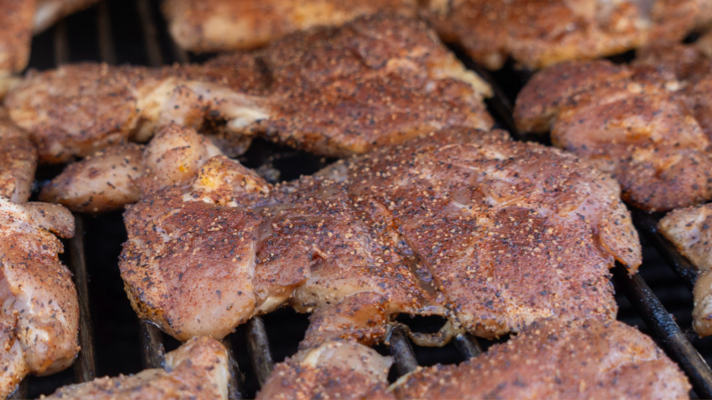
What internal temperature are chicken thighs done
For safety, it is recommended that you smoke your boneless skinless chicken thighs until they reach an internal temperature of 165°F. Time will vary depending on the thickness of the chicken thighs, which is why it is so important to monitor the chicken’s internal temperature.
What to serve with smoked boneless skinless chicken thighs
This is where the boneless skinless format really earns its place. You're not working around a bone or fighting rubbery skin — just clean, smoky chicken that plays nicely with almost anything.
As a main dish: Serve whole thighs with classic BBQ sides. A skillet of fresh cornbread, a scoop of baked beans, and a summer coleslaw covers most of the crowd. The stout beer brine gives the chicken enough flavor to hold up without sauce, but a good mopping sauce applied in the last 10 minutes of the cook takes it to another level.
For street tacos: Slice thinly against the grain, warm your tortillas on the grill, and go with pickled red onions, chopped white onion, cilantro, a squeeze of lime, and your salsa of choice. The smoky chicken is the foundation — let the toppings do the work. A medium chipotle salsa here is fire.
For grain bowls: Dice the chicken and build over cilantro-lime rice with black beans, roasted corn, avocado, and a drizzle of your favorite hot sauce. Meal prep four bowls on Sunday, grab one each day through Thursday.
For smoked chicken salad: Chop finely and mix with a little mayo, celery, red onion, fresh dill, and a squeeze of lemon. The smoke flavor transforms a basic chicken salad into something that feels intentional. Excellent on sourdough or with crackers.
For pasta: Slice thin and toss into a creamy pasta — alfredo, a white wine butter sauce, or a sun-dried tomato cream. The smoke adds a depth that makes the whole dish feel like it took way more effort than it did.
Storage and reheating smoked chicken thighs
One of the best arguments for making smoked boneless skinless chicken thighs is how well they hold up after the cook. This is legitimately one of the best proteins to batch-smoke for the week.
Refrigerator: Store cooked thighs in an airtight container for up to 4 days. Let them cool to room temperature before sealing — trapping steam degrades the texture faster.
Freezer: Smoked chicken thighs freeze beautifully for up to 3 months. Wrap individually in plastic wrap, then store in a freezer bag with the air pressed out. Having a stash of these in the freezer is a meal-prep cheat code.
Reheating without drying them out:
The enemy of leftover smoked chicken is high, dry heat. Avoid the microwave if you can help it.
Oven method (best results): Preheat to 300°F. Place thighs in a baking dish with a splash of chicken broth or water, cover tightly with foil, and heat for 15–20 minutes until warmed through. The moisture keeps them from drying out.-
Skillet method (best texture): Medium heat, a small amount of oil or butter, covered lid. 4–5 minutes per side. Gives you a slightly crisped edge and great texture for slicing into tacos or bowls.
Microwave (fastest): Wrap in a damp paper towel to retain moisture. 60–90 seconds. Works in a pinch, loses some texture.
Frequently asked questions
Do I need to flip boneless skinless chicken thighs while smoking?
On a pellet grill or offset smoker, no — the indirect heat and airflow cook the chicken evenly without flipping. On a kettle-style charcoal setup where you have hot spots, a flip at the 45-minute mark helps even things out. When in doubt, check your internal temperature rather than relying on appearance.
Can I smoke frozen boneless skinless chicken thighs?
You should thaw them first. Smoking from frozen leads to uneven cooking — the outside reaches temperature before the center is safe. Thaw in the refrigerator overnight, then brine. If you're short on time, a cold water bath (chicken sealed in a bag, submerged in cold water, changed every 30 minutes) can thaw 2 lbs of thighs in about an hour.
What's the difference between smoking boneless skinless thighs vs. bone-in skin-on?
The main trade-off is flavor vs. versatility. Bone-in skin-on thighs have more fat content, which protects moisture and adds flavor — they're a more forgiving smoke and the skin can crisp up beautifully at higher temps. Boneless skinless thighs cook faster, have no bones or rubbery skin to navigate, and are significantly more versatile for use in other dishes. I smoke both, but when I'm cooking for the week, boneless skinless wins every time.
Why smoke at 250°F instead of 275°F?
Most smoked chicken thigh recipes call for 275°F, and that's the right call for skin-on thighs — higher heat helps render the fat and crisp the skin. With no skin in the equation, that logic disappears. 250°F gives you more time in the smoke window for flavor absorption without overcooking, and it's more forgiving on thin thighs that can dry out quickly at higher temps.
Can I make these on a gas grill without a smoker?
Yes, with a smoking box or foil pouch. Fill a smoker box (or make a foil pouch) with soaked wood chips, place it directly over a burner on high heat, and once it starts smoking, move your chicken to the indirect side of the grill. Keep the lid closed as much as possible. You'll get 30–45 minutes of decent smoke before the chips burn out. It's not the same as a dedicated smoker, but it's real smoke flavor on a gas grill.
How do I know when smoked chicken thighs are done?
Internal temperature is the only reliable method. Pull them at 165°F — this is the FDA-recommended safe temperature for poultry. That said, chicken thighs (unlike breasts) won't immediately dry out if you go to 170°F or even 175°F. Dark meat is more forgiving. Use an instant-read thermometer at the thickest part of the thigh, not near the bone (if there were one) or the thinner edges.
Do I have to use a beer brine, or can I skip it?
You can skip it, but you'd be leaving a lot of flavor on the table. A basic salt-and-water brine is better than nothing — use 1 tablespoon of kosher salt per cup of water, submerge the chicken for at least 4 hours. The stout beer brine specifically adds malt and depth that complements smoke in a way plain water can't. If you're not a beer person or just don't have one on hand, try an apple juice and salt brine as an alternative — the acidity and sweetness pair well with apple or cherry wood.
Can I use boneless skinless chicken thighs for competition BBQ
Generally no — competition BBQ categories typically require bone-in thighs with skin (KCBS and most major circuits require skin-on entries). But these are absolutely competition-quality eating, and the techniques here — overnight brine, low-and-slow smoke, resting before serving — are the same fundamentals that win competitions. Just on a different cut.